
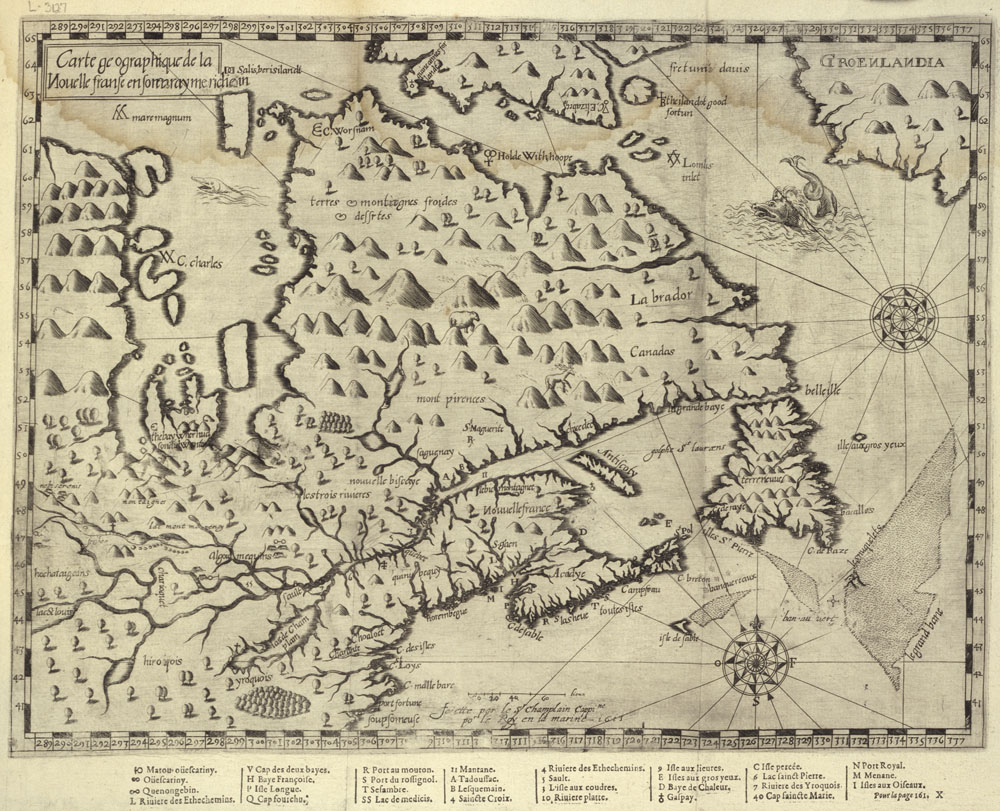
In 1535, French explorer Jacques Cartier mapped the Gulf of Saint Lawrence and the territory where the city of Quebec and Montreal now reside (les Canadas).
He is the founder of Canada and claimed it for New France. Even though these territories came into the possession of the British with the Treaty of Paris (1763), Canada maintains it’s French heritage.
In the debate surrounding Canadian nationalism, and the enhancement of national identity in Canada, one of the pivotal points of contention is that of language: are Canadians English, French, or both?
During his tenure as Prime Minister in 1970s, Pierre Trudeau enacted official bilingualism as a government policy. However, this policy is ill-conceived because a confederacy cannot occupy divergent languages. Canada must be either French or English, but it cannot be both.
What has transpired since the adoption of official bilingualism is a cultural stagnation that has been detrimental to our national character. Therefore, we must dissolve official bilingualism in favor of unilingualism.
The position of the Canadian Nationalist Party is that, not only has Canada traditionally been French, but it remains so. While the Anglophone squats on a national identity not rightfully theirs, the French are embroiled in a confederacy that largely treats their linguistic rights as an exception rather than the rule.
Definition:
squat – (1) unlawfully occupy an uninhabited building or area of land (2) a property acquired by squatters
What we see is that Canadians are French. A person who is not French cannot be Canadian. Originally, Canadians were French Catholics – and in this faith-based identity we find the heritage of Canada.
Anglophones must develop their own sense of national identity distinct from the Francophone.
Although it may be uncomfortable, the English speaking population in Canada would be well served to admit that Canadian nationalism belongs to the French, and that they must create their own national identity based on common values.
Contrary to popular opinion, Canadian nationalism would not be served by Quebec separatism (nor the continued merger of French and English interests into a common confederacy), but rather, the Anglophone declaring their independence from Canada.
Anglophones would best be served by recognizing Canadian nationalism is Francophone while working to develop their own sense of identity in accordance with English common law.